Moving to a new German city as a single expat can feel isolating, and security concerns are completely natural. Unlike shared housing or university dormitories, living alone means your apartment's safety depends largely on your own choices and awareness. Whether you're settling in Berlin, Munich, Frankfurt, or Cologne, understanding Germany's rental laws, security standards, and practical protection methods is essential for building confidence in your new home.
Germany maintains high safety standards overall, but apartment security varies significantly by district and building age. As an English-speaking expat, you may encounter rental agreements in German that specify what security measures are permitted, landlord responsibilities, and tenant rights regarding modifications. This guide walks you through legal security upgrades, smart technology solutions, and behavioral practices that will help you protect your apartment while respecting German housing regulations.
Understanding Your Rights and Landlord Responsibilities
In Germany, landlords have a legal obligation to provide secure locks meeting DIN standards on all entry doors. The most common standard is DIN 18251, which specifies minimum security requirements for locks. Your lease (Mietvertrag) should confirm that all doors have functioning locks, and your landlord must repair or replace any defective locks at their expense. As a tenant, you're entitled to request improvements if the current security is inadequate, though major modifications typically require written permission.
When you first move in, document the apartment's condition with photos and request a detailed Übergabeprotokoll (handover protocol) listing all locks, keys, and security features. This protects you financially and establishes a baseline for your security setup. If you discover missing keys, broken locks, or damaged door frames during your initial inspection, report these immediately in writing (per Einschreiben, registered mail) so the landlord cannot charge you for repairs later.
Most landlords appreciate tenants who maintain security responsibly. However, expensive modifications like reinforced door frames or additional electronic locks may require written approval. Many landlords are willing to agree if you offer to reverse changes when you move out. Always communicate in writing and keep copies of agreements—this is standard German practice and protects both parties.
Essential Locks and Hardware Upgrades for Renters
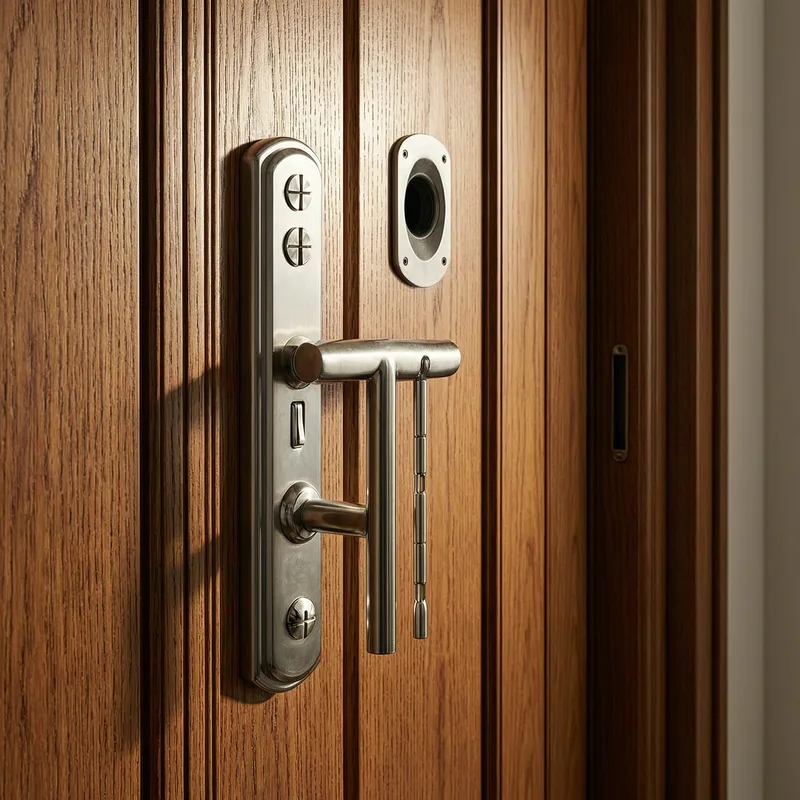
The entry door lock is your first line of defense. German apartments typically have profile cylinder locks (Profilzylinder) that accept standard keys. If you're unhappy with the original lock, you can often upgrade to a higher-security model while keeping it removable—meaning you can take it with you when you leave and reinstall the original. Look for locks certified to DIN 18252 or higher, which resist picking and drilling. Brands like ASSA ABLOY, Mul-T-Lock, and ABUS offer excellent German-made options.
Beyond the main lock, consider adding a door chain or security bar for extra assurance when answering the door. These are inexpensive, non-permanent, and allow you to open the door partially before fully committing. A door reinforcement plate (Türsicherungsblech) prevents forced entry by distributing impact force across the door frame—this can be installed with adhesive or screws and doesn't require landlord permission in most cases. For windows, window locks (Fensterriegel) or sash locks add security without damage.
If your apartment has a balcony or terrace, ensure sliding glass doors have functioning locks and consider a sliding door bar or portable lock. Ground-floor and basement apartments need particular attention to window security. Install locks on all windows, and remember that in Germany, many people keep windows closed and locked at night as standard practice—this is both a security measure and an energy-efficiency habit you should adopt.
Smart Technology and Modern Security Solutions
Modern technology offers excellent security options for rental apartments without permanent modifications. A smart doorbell camera (like Logitech Circle View or similar brands available in Germany) lets you see who's at your door before opening it. Many models are battery-operated and mountable with adhesive, requiring no installation by a professional. Motion-activated video recording provides evidence if anything suspicious occurs, and you can monitor your door remotely via smartphone while at work or traveling.
Consider a portable door lock alarm or window vibration sensors that alert you via smartphone if entry is attempted while you're away. German tech retailers and online shops stock ABUS and Eve Systems products specifically designed for rental apartments. A simple wireless security system with door/window sensors costs €50–200 and requires no wiring. Some expats also install motion-sensor lights on balconies—these are removable and act as deterrents while improving visibility.
However, avoid permanent smart locks that replace your entire lock mechanism unless your landlord explicitly approves in writing. They may be viewed as modifications requiring restoration upon move-out. Stick to removable, non-invasive technology that you can take with you.
Daily Habits and Behavioral Security Practices
Physical locks and technology matter, but daily awareness is your most powerful security tool. Always lock your door and windows, even when home or stepping out briefly—this is standard German practice and dramatically reduces opportunistic theft. Never advertise that you live alone; consider leaving lights on random timers or asking neighbors to park in your spot when you travel. Be cautious about sharing your address or apartment details with strangers online or in public spaces.
Establish relationships with neighbors and building management—they often notice suspicious activity and can contact you or police if something seems wrong. Keep copies of your key with a trusted friend as backup, but never hide spare keys outside your apartment. Use privacy settings on social media to avoid broadcasting when you're away from home. If you travel frequently, inform your landlord, ask neighbors to collect mail, and consider hiring a housesitter for extended absences.
Frequently Asked Questions
Not entirely. German landlords cannot prevent you from replacing a defective or insecure lock that they're legally required to maintain. However, they may require written approval for upgrades beyond legal minimums. Most landlords agree if you promise to restore the original lock when moving out. Always request permission in writing to avoid disputes.
Document damage immediately with photos and a written report (Übergabeprotokoll). Send this to your landlord via registered mail (Einschreiben) within 2 weeks of move-in. Request repairs in writing and set a reasonable deadline (typically 2–4 weeks for non-emergency repairs). Your landlord is legally obligated to fix security issues at their cost; never pay for repairs resulting from prior tenant damage.
Yes, doorbell cameras and motion-sensor devices that don't record neighboring apartments or common areas are legal in rental apartments. However, check your lease and inform your landlord out of respect. Never record hallways, stairwells, or neighbors' doors—this violates privacy laws. Always ensure your device complies with GDPR and German privacy regulations.
DIN 18252-certified profile cylinder locks offer excellent security for rentals. Brands like ABUS, ASSA ABLOY, and Mul-T-Lock provide high-quality options available at hardware stores and locksmiths across Germany. Choose a removable lock so you can take it with you—most locksmiths (Schlüsseldienste) can help you find and install one approved by your landlord.
Yes, it's very common. Germans typically close and lock all windows at night and when away, treating this as both a security and energy-efficiency standard. Install functional locks on all windows, and adopt this habit immediately. It's one of the simplest and most effective security practices you can implement in any German apartment.
English-speaking locksmiths available 24/7 across Germany.