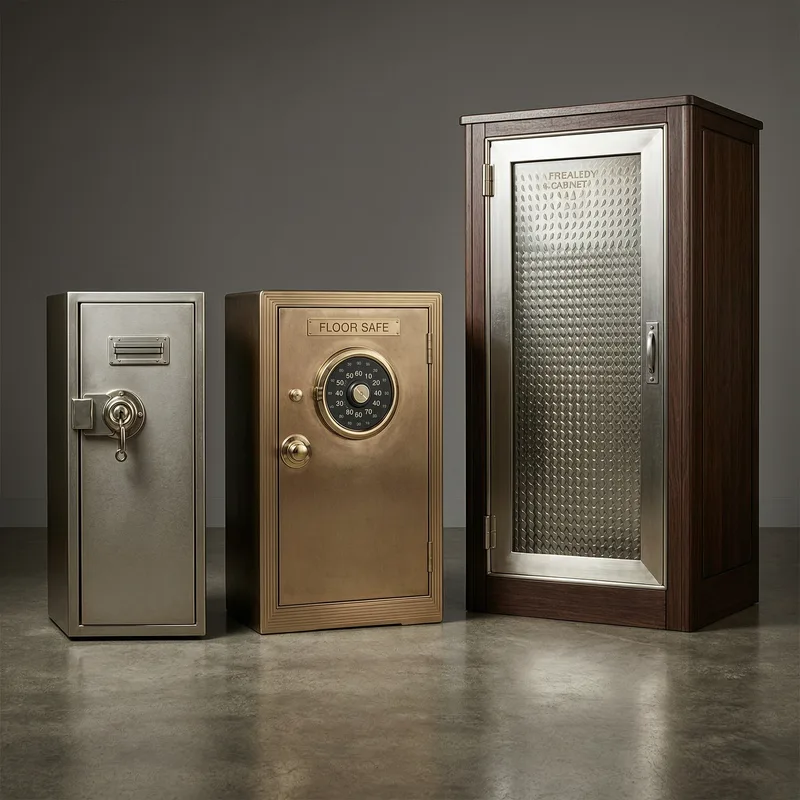
Whether you're an expat securing important documents, a business owner protecting valuables, or a homeowner meeting insurance requirements, choosing the right safe in Germany involves understanding your options and local standards. German safes are built to rigorous DIN EN 1627 specifications, ensuring reliable protection across multiple resistance classes.
This guide explores the main safe types available in Germany, from wall and floor safes to portable options, helping you understand which solution matches your security needs, space constraints, and budget. We'll also cover practical considerations like installation, insurance certification, and where to seek professional help.
Wall and Built-In Safes
Wall safes are among the most popular choices for apartments and homes across Germany. These compact units install directly into an exterior or interior wall, offering concealment and space efficiency. They typically measure 30–50 cm in width and 20–35 cm in height, making them ideal for storing documents, jewellery, and smaller valuables without dominating a room.
Leading German brands like Burg-Wächter, Wertheim, and Format manufacture wall safes in various resistance classes (RC1 through RC4). Wall safes with a key or combination lock mechanism are common, though electronic locks are increasingly available. Installation requires drilling into your wall and securing the safe frame, which renters should clear with their landlord under German rental law (Mietrecht).
The main advantage is discretion—a framed picture or mirror can conceal a wall safe. However, they're vulnerable to prying if discovered, and once compromised, removal is difficult. For maximum security, position your wall safe away from obvious locations, avoid telegraphing its presence, and choose a model certified to at least RC2 or RC3 standard if you're storing high-value items or meeting insurance requirements.
Floor and Vault Safes
Floor safes offer superior protection through weight and concealment. These heavy-duty units are sunk into concrete floors or embedded beneath floorboards, making them nearly impossible to remove or break into without specialized equipment. Floor safes typically weigh 100–500 kg and range from small personal models to large commercial vaults, with resistance classes often reaching RC4, RC5, or higher.
German manufacturers like Burg-Wächter and BASI produce floor safes designed for residential and commercial use. Installation is permanent and requires professional fitting—drilling into your concrete floor, creating a mounting cavity, and sealing the safe securely. This makes floor safes impractical for renters unless your landlord explicitly permits it and structural changes are acceptable.
The advantage is formidable security and complete concealment—a floor safe can be covered by carpet or furniture. Insurance companies often require a floor safe (or equivalent RC-rated alternative) for high-value claims. The downside is installation cost, permanence, and the fact that you must plan for a floor safe when renovating or building. Professional installation through a certified locksmith ensures compliance with German building standards and insurance requirements.
Portable and Portable Deposit Safes
Portable safes offer flexibility for renters, frequent relocators, and those unwilling to modify their property. These standalone units—ranging from small 15–20 cm boxes to larger cabinet-style safes—can be moved and secured to furniture or walls with bolts. Most portable safes are manufactured in steel, with ratings typically ranging from RC1 to RC3.
Brands like Burg-Wächter produce compact portable models suitable for apartments. They're ideal for documents, passports, cash, and small jewellery items. However, portable safes are easier to remove than built-in options, so securing yours to a sturdy piece of furniture or wall anchor is essential. Insurance companies may accept portable safes (depending on resistance class and whether they're anchored) but typically prefer built-in or floor models for high-value coverage.
Choosing the Right Safe: Key Factors
Consider five factors when selecting a safe in Germany: your security needs (valuables type and worth), insurance requirements (Hausratversicherung policies often specify RC rating), installation feasibility (rented vs. owned property), space and accessibility (how often you need items), and budget. Renters should prioritize portable or wall safes; homeowners can invest in floor safes. Always verify your insurance policy—many German insurers require RC2 minimum for coverage, RC3 or higher for premium valuables.
When in doubt, consult a certified locksmith. Our locksmiths serve across Germany and can assess your property, recommend appropriate models, and arrange professional installation. Contact us at 015161134271 for guidance on safe selection and installation.
Frequently Asked Questions
English-speaking locksmiths available 24/7 across Germany.