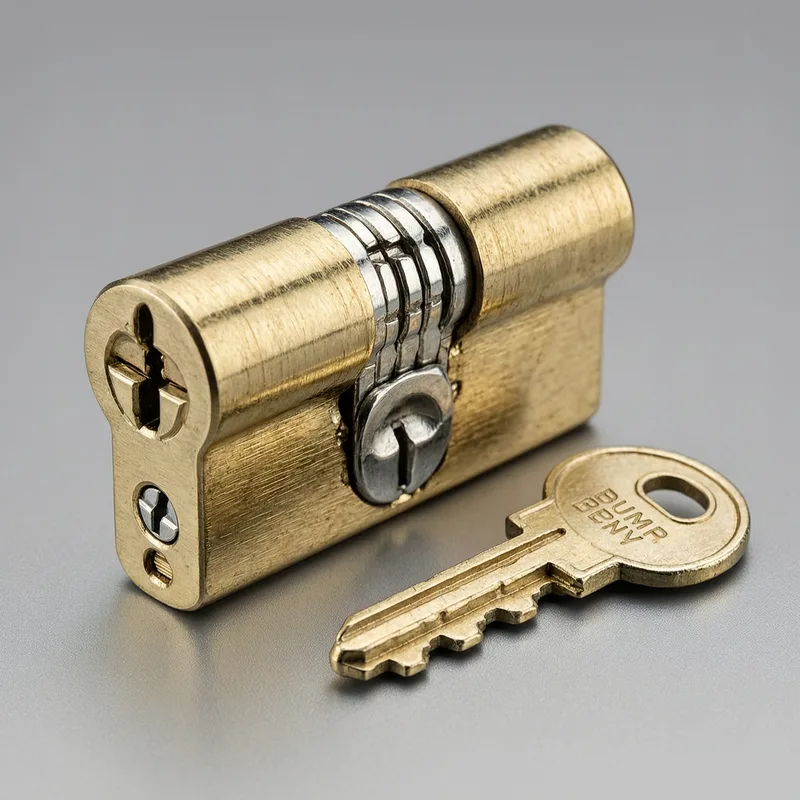
Lock bumping—a technique where a specially cut key is used to force a lock open—remains a concern for property owners across Germany. If you've recently moved to Germany or are considering upgrading your home security, you've likely encountered anti-bumping locks marketed as premium solutions. But are they truly necessary, and do they justify their higher price tags?
This guide helps English-speaking expats and international residents understand anti-bumping technology, German security standards, and whether this investment makes sense for your specific situation. We'll break down the facts, costs, and practical alternatives so you can make an informed decision about your home's security.
How Lock Bumping Works & Its Real Risk
Lock bumping exploits the mechanical tolerances in pin-tumbler locks. A specially prepared 'bump key' is inserted into the lock, and a sharp downward strike causes the pins to jump momentarily out of the shear line, allowing the lock to turn. The technique became widely known in the early 2000s and remains a legitimate concern for security professionals worldwide, including those working in Germany.
However, it's important to understand that bumping requires physical access to your door, a correctly cut bump key, and often multiple attempts. Police data from German states shows that forced entry—including lock bumping—accounts for only a small percentage of residential break-ins compared to simple lock picking or brute force attacks on frames and hinges. Most burglars prefer faster, noisier methods like prying doors open.
That said, in high-crime areas of major German cities like Berlin, Frankfurt, or Cologne, anti-bumping locks combined with other security measures can be part of a comprehensive defense strategy. For most expats in suburban or rural areas, the actual risk remains relatively low.
German Standards & Anti-Bumping Technology
Germany maintains strict security standards for locks through DIN (Deutsches Institut für Normung) certifications. The most relevant standard is DIN 18252, which classifies mechanical locks into grades based on security level. DIN Grade 3 represents the highest standard and typically includes anti-bumping features such as mushroom pins, serrated pins, or sidebar mechanisms.
True anti-bumping locks often employ several technical measures: hardened steel plates that prevent the bump key from cutting smoothly, pins with complex profiles, and additional mechanical barriers. Reputable German brands like ASSA ABLOY, Mul-T-Lock, and Häfele produce certified anti-bumping cylinders that meet or exceed DIN 18252 Grade 3 requirements. These locks provide genuine protection against bumping techniques.
When shopping for anti-bumping locks in Germany, always verify DIN certification and Grade ratings rather than relying on marketing claims alone. A certified Grade 3 lock from an established manufacturer provides measurable security improvement over standard Grade 1 or 2 locks, regardless of anti-bumping claims.
Cost-Benefit Analysis for Expats
Anti-bumping locks typically cost 15–40% more than standard certified locks in Germany. A high-quality anti-bumping cylinder from a trusted brand might cost €80–180, while a solid DIN Grade 2 lock costs €50–100. Installation by a professional locksmith adds €60–150 depending on your location and current door setup. For comparison, upgrading door frames, adding deadbolts, or installing modern electronic locks can offer superior security at similar or lower price points.
For most English-speaking expats in Germany, the decision hinges on your neighborhood's crime rate, your home's visibility and accessibility, insurance requirements, and personal peace of mind. If your rental agreement or insurance policy specifically recommends Grade 3 locks, anti-bumping cylinders become a logical choice. If you live in a secure building with controlled access and good neighbors, a high-quality Grade 2 lock combined with window locks and door frame reinforcement may provide equal practical protection at lower cost.
The genuine value of anti-bumping locks lies not in eliminating all break-in risk—no lock does that—but in eliminating one specific vulnerability while signaling serious security commitment, which itself can deter casual burglars.
Practical Recommendations for Your Situation
Before investing in anti-bumping locks, conduct a realistic security audit of your property. Assess your door frame quality, window locks, building access controls, neighborhood demographics, and insurance recommendations. If you rent, consult your landlord about permitted modifications. Many landlords in German cities actively encourage security upgrades when they comply with DIN standards and don't damage the property.
For maximum security value, combine anti-bumping locks with complementary measures: reinforced door frames, secondary deadbolts, security chains, and motion-sensor lighting. Electronic smart locks with keypad or smartphone access offer additional convenience and can eliminate bump-key vulnerabilities entirely. Our locksmith experts at locksmith-experts.de (015161134271) can assess your specific property and recommend a cost-effective security strategy tailored to your needs and budget.
Frequently Asked Questions
German law does not mandate anti-bumping locks for residential properties. However, some insurance policies recommend or require DIN Grade 3 locks—which typically include anti-bumping features—for full coverage eligibility. Check your specific insurance contract and landlord agreement before upgrading. Most standard policies accept DIN Grade 2 locks as adequate protection.
Anti-bumping locks specifically defend against bump-key attacks, not lock picking or brute force methods. A skilled lockpick or locksmith can still open many anti-bumping cylinders through conventional picking techniques. True security requires combining anti-bumping technology with reinforced frames, quality hinges, and proper installation. No lock is 100% impenetrable to determined professional attack.
Anti-bumping locks specifically resist bump-key attacks through specialized pin designs. High-security locks (often Grade 3 or above) incorporate multiple features including anti-bumping technology, anti-picking mechanisms, anti-drilling plates, and restrictive keyways. All high-security locks are anti-bumping, but not all anti-bumping locks qualify as fully high-security. Check the full DIN Grade rating, not just anti-bumping claims.
Quality anti-bumping locks from certified manufacturers typically last 10–15 years with normal residential use. They should be replaced if the lock becomes stiff, difficult to turn, or shows signs of wear. Moving homes also presents an opportunity to upgrade for security reasons. Have your locksmith inspect existing locks during routine maintenance to identify replacement needs before failure.
Door frame reinforcement (€30–80), secondary deadbolts (€40–100), security chains or doors bars (€20–60), and quality window locks (€50–150) often provide better break-in deterrence than anti-bumping locks alone. Electronic smart locks (€150–400) eliminate physical key vulnerabilities entirely. For most expats, a layered approach combining frame strength, multiple locks, and good habits offers superior value than anti-bumping technology alone.
English-speaking locksmiths available 24/7 across Germany.